Wednesday, February 14, 2024

Wednesday, February 10, 2021
Using the environment as a learning tool.
In Agroecology we imitate what takes place in nature. By emulating the design of nature we can learn from it's models. This concept runs in parallels with permaculture design principles. Agroecology works with the flow of nature rather than try to dominate or control it. Creating a balanced ecosystem involves developing an intimate relationship with the land. This requires monitoring the woods, the fields, soils and streams. Learning where insects and animals live and the habitats that support them helps us to coexist with the dynamics of nature. Design with nature. Here are a couple of examples. Introducing mycorrhizal fungi into the soils creates a network that not only stimulates growth but also ties the life of the soil together. It operates in symbiosis with other beneficial soil life and triggers changes similar to how our nervous system functions. Birds can be useful and also damaging to crops. By monitoring bird populations one can find a niche where we can work with them. There are many species that have huge insect diets. Plant trees that attract them. Wrens can have a 90% insect diet. They like to nest in mulberry trees. Warblers like mulberry, dogwood, sumac, grapes. Tanagers like mulberry, elderberries, junipers. Catbirds like serviceberry, elderberry, viburnum, cedar, holly, dogwood. These understory trees can bridge the transition between the woods and the field. Our lifestyle has become increasingly separated from nature. We are more connected with the internet and websites than we are about where our food comes from. We do not know where the energy comes from to run our computers. Nature can be a great teacher of what our role on earth needs to be. Leaning is not about memorization. It needs to be about a memorable experience that changes the way we view things. Most education is linear or one dimensional. You remember facts long enough to recite them on a test not connecting that information to everything around it. Three dimensional learning is experiential. That is why my workshops are hands on. All education needs to incorporate heuristic learning. This enables us to discover or learn something through the process by ourselves. This does not mean reinventing the wheel, more so taking what works and expanding upon it. If you don't learn why you do not have a clear understanding of how. In Biodynamics it means, to treat all components as part of an interconnected system that functions together as a living organism. Understand that the soil and the atmosphere above it are composed of billions of microorganisms that depend on each other. And that the entire ecosystem is an organism unto itself. The diversity of natural order supports a symbiosis that works in harmony. This ensures resilience. The same applies to our bodies. Unhealthy bodies indicate an imbalance. An unhealthy lifestyle, especially one separated from nature, makes our immune system vulnerable to diseases, like the covid virus. The concept of what my non profit does: Our programs are designed to connect people with their environment. I am not trying to plant so many trees as much as I am trying to put people in touch with the power of regenerating land and the rewards that it brings. We all need to be better stewards of the planet. This is how to become a whole human being not fragmented beings operating in a disconnected society.
Tuesday, December 8, 2020
Radical Regenerative Gardening and Farming: Companion Planting/ Compatible Relationships
Friday, November 13, 2020
Restoration, Regeneration and Renewal.
It is autumn here. Leaves are turning colors, Soon heading to the ground to become nutrients for next years growth. This is part of natures nutrient cycling. Cover crops replacing last seasons bounty. It is time to replenish the earth. It is time to build a fall compost pile that will enhance the life of the soil for the next season. The grasses in the field have strewn seeds for next years renewal. The seasonal changes that foster restoration are abundant. This is part of regeneration. The part were one accepts natures role and goes with the flow of these cycles. As the forest goes into it's dormant period it is also time to reflect on what the season has offered in the form of food for our bodies, food for out souls and knowledge that will support our growth. The rhythm of nature moves in different timing.
This year seems to be heading into a paradigm shift of consciousness. Change is constant and there is a continuum, yet sometimes it happens faster and greater than many people are ready for. Living and working around nature makes it easier to deal with it. For those who are living away from nature, it might be more challenging. Finding a place in nature can help one can become more centered. It can be a sanctuary of hope and renewal. In the gardens I have set up for people with special needs I promote the idea that as we heal land it heals us. This is especially important now. With my non profit. Recovery Eco Agriculture Project (REAP), we set up programs that regenerate land. The objective is to offer people tools to become better caretakers of the planet. Connecting people with nature can be very empowering if they want to learn to coexist with nature. Fighting nature does not work and it is not working now. The idea is to offer people tools to do the real work of becoming whole. I am planning more reforestation programs like the one we did earlier this year.
There is one theory that if we leave large tracts of land alone trees and forests will regrow. That concept is missing and very important part of the equation. People are destroying the planet and people need to heal it. Besides, we plant native species. Letting it rewild will bring in nonnative invasive species. So we offer people a way to connect with nature as a way to become stewards of it's future. The act of bringing a group together to regenerate a piece of land is very powerful. That is what we do. If you want more information go to; www.recoveryecoag.org There is also lots of information in my book, Radical Regenerative Gardening and Farming, to understand how to regenerate land and grow food. I hope you can be part of this growth. We all have a role to play.
Thursday, September 17, 2020
Companion Planting/ Compatible Relationships

This is a science of compatible relationships, or as Alan Chadwick called, Relationships and Disrelationships. There are a lot of myths around companion planting and how it works. I would like to share what I do based on four decades of experiences that has been researched in different parts of the world. So this is an introduction that would be an entire workshop that takes a few hours. I utilize five components of compatibility. If I can incorporate more than one then the effects become multidimensional. First lets begin with physical or spatial. This is like putting together a puzzle. I fill up space efficiently so there is little room for weeds. This is how nature works. It creates a living mulch that protects the soil and protects the dynamic place where soil meets the atmosphere. Here are some examples. Use plants that do not compete for space. I plant a bed of leaf vegetables like lettuce, spinach in a staggered pattern. In between those plants I can plant a carrot, radish, turnip and fill the space very efficiently. I can also do this with large leaf crops like cabbage. They need to be planted almost a foot and a half apart in staggered plantings. I can plant fast growing turnips or dikon radish in between that open space. About the time the turnips or radish are mature is about the time the cabbage leaves begin to fill up that space. So this is a succession and two crops in one. Another example is to plant tall plants the serve as a trellis. Pole beans and corn are good for this. Along with winter squash, this is referred to as the three sisters. It is an old Native American example of companion planting. I grow cucumbers on a horizontal trellis. I plant a few sunflowers in between. The cucumbers climb onto to sunflowers nicely. The sunflowers attract lady bugs that clean aphids off of the cucumbers. A row of beans or peas planted on the west side of a bed can offer some afternoon shade for leafy greens. There are many more examples of doing this creatively. The next area is Biological. This involves using plants that will attract beneficial insects. This can also be referred to as organic IMP (Integrated Pest Management). I grow a lot of cut flowers for market and herbs. Many of them are host plants for beneficial insects. Umbelliferae, like Ammi majus, dill, cilantro, fennel, Queen Anne's lace are good for a wide range of wasps, damsel flies, lacewings, etc. The composite flowers like shasta daisy, sunflowers, and other daisies attract lady bugs, pirate bugs, predatory mites and so on. Allysum is wonderful for hover flies. Grasses attract spiders that eat most insects. Golden rod attracts soldier beetles. Yarrow attracts lacewings. One thing I often do is to plant borage around my tomatoes. The borage attracts the braconid wasp. The wasp stings and parasitizes tomato horn worm and plants it's eggs inside the worm.(photo below) This is a very effective way to curb their population. There is an extensive amount of flowers and herbs that provide a biological magnet for beneficial insects. Buckwheat attracts a wasp that gleam squash bugs. There are many examples of how this works.


The next area is Botanical. This involves plant pheromones that deter insects and diseases. Japanese beetles are attracted to delphiniums and larkspur. The beetles consume them and die. This is good around fruit trees. Tansy and mints are good around fruit trees susceptible to ant damage. Wormwood (artimesia) and catnip deter a wide range of insects. I plant garlic chives down in tomato beds. They do well with almost no sun. Many herbs are planted under plants that need to be trellised, like tomato, peppers and eggplant. This is an example of polyculture. Plants that produce essential oils are good to work with. The next is Chemical. This involves mostly root exudates. This is were plants give off oils underground that ward off insects and diseases. African black oats and French marigolds will get rid of root knot nematodes. Rosemary root exudates can inhibit many diseases, especially in tomatoes. Mustard oil discourages carrot wire worms. Garlic and many herbs are useful for exuding beneficial root exudates. The last section is nutritional. Legumes, like beans, peas, lupines, clover put nitrogen in the soil. A good rotation would be leaf crops. Dynamic accumulators concentrate nutrients and release them in the soil. Comfrey is excellent source of potassium, calcium, phosphorus, copper and iron. Plants can benefit from planting around it. You can also make a tea from comfrey to put on plants. Dandelion also accumulates potassium, phosphorus, calcium, copper and iron. Stinging nettle and lambs quarters accumulates Calcium, phosphorus, sulfur, iron and sodium. You can also turn these plants into the soil so they release nutrients as they break down. This is a highly experimental science. The results vary a lot from location to location and from year to year. There are many factors that determine the out come. like the weather. So it is not a matter of factual science. This is a system that involves diversity and diversity supports balance. There is more information in my book; Radical Regenerative Gardening and Farming.
Thursday, June 25, 2020
Radical Regenerative Gardening and Farming: How to be a good steward of the land and a good ga...
How to be a good steward of the land and a good gardener.


Wednesday, April 22, 2020
A long term response to dealing with Covid 19 virus.
The first one is finding the right environment. If I grow a large crop of one plant it is more susceptible to whatever pest targets that plant. This is why I stay away from growing a monocrop. I have been in cattle feed lots and large chicken houses where there is a dense population of one species. This is a ripe environment for whatever parasite targets that group. I have seen many situations where people congregate inside subway stations or events or even in downtowns that closely resemble a feed lot or chicken house on a much larger scale. Considering how our cities are designed, I am actually surprised an epidemic of diseases are not more common. The way we design cities is that we pave over nature and fill it up with structures for high density human occupation. Living in South East Asia was incredible to see so many people in such close proximity. A diversity of species favors a balance in nature. This balance supports resilience. This is a rule for growing using agroecology. So if our cities were allowed to invite in more nature like parks and pedestrian beltlines this would help. The way cities are presently designed is not a healthy environment to live in. This is a hard sell to real estate venture capitalists. The disconnect with nature is part of the disfunction of modern society.
Wednesday, March 25, 2020
Regenerative Permaculture Reforestation
Tree Planting Program. In early 2020 with my non profit, REAP. I coordinated tree plantings across Georgia. We acquired 20,000 native trees. The trees were distributed in communities where secure land would allow the trees to grow for many years. The concept was to offer people something tangible they could do that would make a positive impact in there immediate area. The trees were made available free of charge. The idea was to offer ideas on how to regenerate land as a way of learning how to become better caretakers of the planet. I had originally did this thirty years ago for the 20th anniversary of Earth Day in 1990. Back then we organized and planted close to 17,000 trees. That program was very successful because of all the enthusiasm around Earth Day in 1990. In 2020 I choose to make it an even 20,000 trees. We worked with foresters, city arborists, the DNR, county extension agents, environmental non profits, a few church groups. Many colleges got involved and utilized students to plant the trees. The trees were a mix of mostly hardwoods and a few evergreens. We donated a thousand longleaf pines to wildlife biologists that are working on bringing back endangered species in Longleaf pine habitats. In hindsight I wish I would have acquired more longleaf pines to donate to such a worthy cause. The trees were seedlings ranging from 1 foot tall to six foot tall. They are trees for the future, for our grandchildren. When I did this program in 1990, I went into many schools to plant trees with children. I would tell the 4th and 5th graders that they could come back in 30 years with their children and tell them that they planted that tree when they were in the fourth grade. Now that that concept has reached fruition, I thought it was time to do it again. Reforestation and regenerating a forest is done in several phases. First planting the taller trees that will become the upper canopy along with staggered plantings of smaller trees that are the understory. Next introduce native grasses, broadleaf plants, legumes and wildflowers that will cover the floor. Some habitat trees like serviceberry, mulberry, quince, etc, also contribute to habitat restoration. Some of this needs to be replanted as needed to fill in empty spots and for a healthy succession. Once the growth becomes established it would be useful to introduce mushrooms to encourage a healthy mycology in the soil. Most important is to check all erosion. Regenerating a piece of land is incredibly rewarding and helps you connect with the earth in a way that is very fulfilling. Regenerating land is a way of regenerating ourselves and helps us to become whole.


Thursday, November 7, 2019
Tuesday, November 5, 2019
Monday, November 4, 2019
Enhanced Ecosystems
So can we mimic these behaviors through hybridization to support this type of development? It does work on a very short term basis with GMOs. Yet this short term is not truly sustainable. It relies on outside inputs and artificial interaction. This means it addresses issues on a one dimensional level. The dynamics of a biologically balanced ecosystem is three dimensional and difficult, if not impossible to manifest with genetic interference. To facilitate the forces of nature is to hold obedience and reverence to the laws of nature. Nature works in multidimensional patterns.
So creating a healthy environment is key to growing the best plants. This is done both above and below the ground. With diversity I incorporate my cut flowers or herbs in or near beds with vegetables and fruit. They attract beneficial ones and deters unwanted ones. This is part of Integrated Pest Management (IPM). Here is an example. Buckwheat attracts a wasp that preys on squash bugs. Grasses harbor spiders. Grasses also attract leafhoppers and thrips that can be vectors of disease. that can be a problem for grapes. So grasses are allowed around squash but not grapes. With diversity I try to introduce compatible relationships. Learning what works is an ongoing process. The dynamics of each microcosm is unique. Plants adjust to their surroundings. If I were forming an education group, I would prefer it to develop organically. Plant groupings develop their own dynamics. In ecosystems the ability to adjust to their environment is very important. Each garden setting is unique and a one of a kind. It's individuality favors it's beauty. Plants acclimate to more extreme weather than ever before. So hardy plants are needed to deal with these challenges. Healthy soils create healthy plants. Biotic or biological factors are important to maintain. Cynobacteria (blue green algae), azospirillum, rhizobia, and antinomycetes are just a few bacterial that build healthy soils. The best way to encourage this is with quality compost. I try to use diverse manures in my piles. I also use minerals like granite sand (high in K). I also use high nutritious plants like compfrey, stinging nettles, dandelions, yarrow, chamomile, Good compost does so much. Epigenetics: the study of changes in organisms caused by modifications of gene expression rather than alterations of the genetic code itself (which is what GMO is trying to do. Plant growth substances (phytohormones) that promote cell division or cytokinesis. A PH of 6.5 helps make nutrients available to plants. Soils that hold water yet drain and breathe are important to a healthy biology in the soil. Being a good steward of land is a commitment that comes with an ongoing learning process. There is more information in my book, Radical Regenerative Gardening and Farming.
Tuesday, October 15, 2019
Radical Regenerative Gardening and Farming: Radical Regenerative Gardening and Farming: Hortic...
Principles of Regenerative Agroecology
Monday, September 2, 2019
Radical Regenerative Gardening and Farming: Horticulture Therapy
Sunday, September 1, 2019
Horticulture Therapy
 The concept of horticulture therapy is: to heal the land and let it heals us. This applies to all land use, farming gardening, etc. Connecting with the soil is a way of connecting with a part of ourselves, where we come from and where we are going back to. Nature enhances our lives. Working in a garden you find your place in nature. It is centering and allows us to put our life in perspective. While in this relaxed state I can get people to talk and share about their wonderful life or not so wonderful. As they open up they become full of the life around them. plants communicate with us on subtle levels. There is also a feeling of accomplishment when people see things grow that they planted. A garden simplifies our life. The cycle's of nature in the garden operate at a slower rhythm yet on a continuum of life. It offers insight on how the world operates in balance.
 At the VA center in Decatur, GA I worked with a quadruple amputee, Von Heinze, a Viet Nam vet. I thought, if he can garden anybody can. This is a rooftop garden of containers. Enable is a day center for adults that are developmentally disabled in Red Oak, GA. These are not productive gardens, nor are they focused on aesthetics. These are fun gardens. It is important to remember, that if you grow for food or you grow for your lively hood, are you having fun? This reminds me that when I am out driving around in urban cities I feel very disconnected from everything. When I am working in the garden I am in a centered, more sane environment that makes more sense to me. I also spent time at a community garden at Christian City in Union City, GA. This is a retirement community. They have boxes off the ground for wheel chair access.
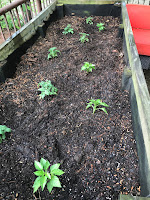 With ambulatory people we dig a bed in the ground. I do not need lumber for boxes on the ground. I also do not buy soil, compost or plastic. The role being a gardener is that of a producer not a consumer. The boxes in the barrier free gardens are of recycled materials. The compost comes from my farm or I use very old rotted manure from a horse stable for soil. It is difficult to get people to think outside the box. I either contribute my seeds or get seed donations. The mind set of being a consumer in all our activities runs deep. Regenerating a piece of land offers many rewards that are described in my book, Radical Regenerative Gardening and Farming. Sharing this fits into the concept of; the gift is in the giving. Thanks to these groups for allowing me to contribute to their programs.
 Below is John watering the beds he helped plant.
 Saturday, March 23, 2019
Weeds as indicators of your soil and other uses.

Tuesday, February 12, 2019
Radical Regenerative Gardening and Farming: Pruning Fruit Trees The primary pruning of fruit...
The primary pruning of fruit...: Pruning Fruit Trees The primary pruning of fruit trees is an annual event. In my region it takes place in early Feb. while trees are stil...
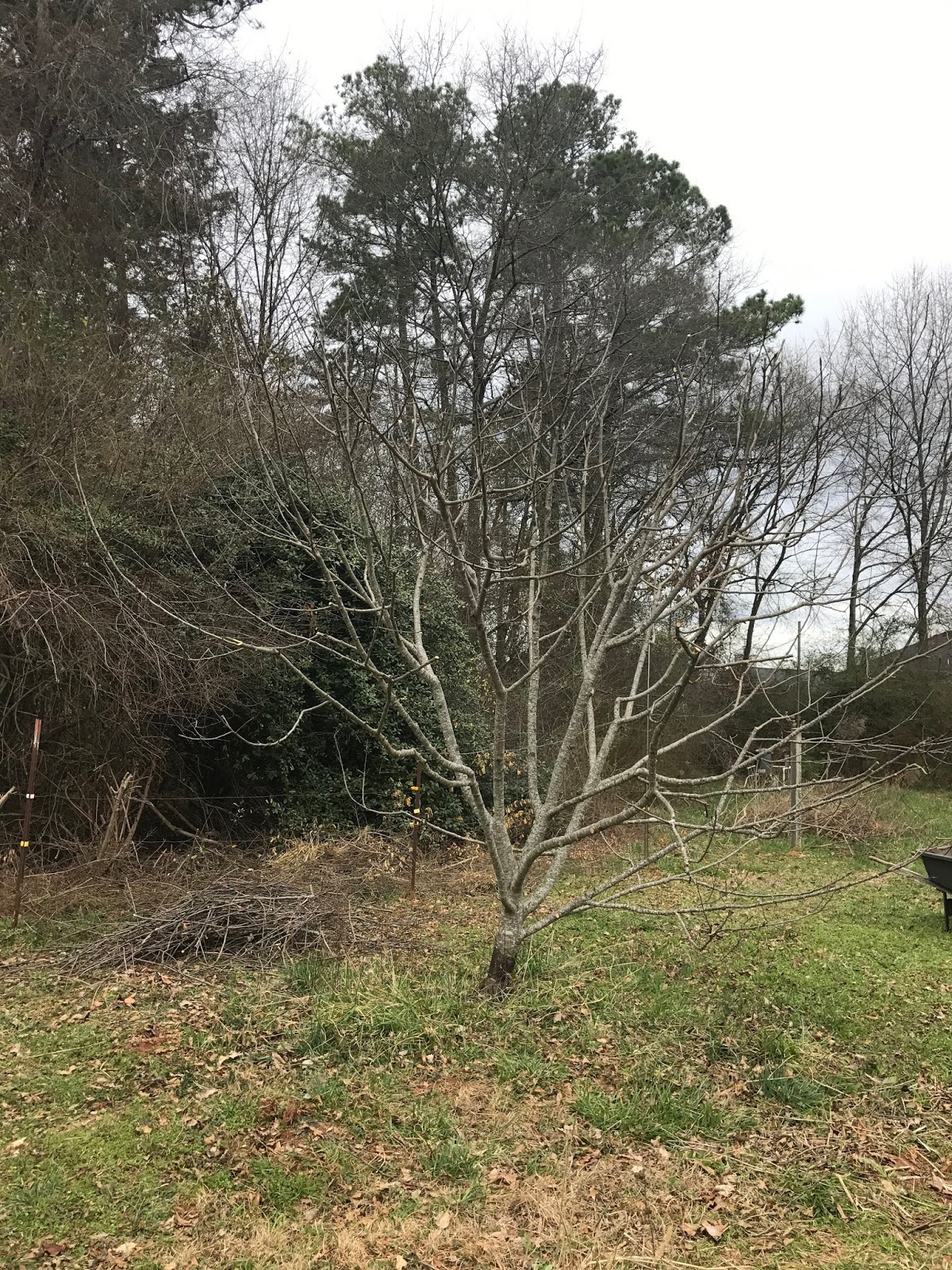
The primary pruning of fruit trees is an annual event. In my region it takes place in early Feb. while trees are still dormant when the threat of heavy frost is over. This is also when it is time to prune roses and shrubs. This is an opportunity to control the shape of the tree. It also helps you open the tree up so to discourage pests and disease. Taking extra care of your trees and they will reward you with a plentiful amount of fruit later in the year. If you are cutting out disease make sure to disinfect your tools with an alcohol wipe especially before moving on to the next tree. Step back periodically to view the shape before deciding what needs to be taken out. Over lapping branches are important to remove. Strive for a shape to encourage healthy growth and accessibility when picking fruit. Look for insects hibernating in split bark.and diseases to be cut out. Sanitation is an important part of fruit tree maintenance. So raking out rotted fruit and leaves is part of the maintenance. If tree have diseases, like fire blight, use diluted bleach on tools between cuts. I also posted a blog on 7/15 on fruit tree care. That blog covers taking care of fruit trees during the growing season. Trees are an important part of any farm or garden. They add dimension. In my design, I use them to establish a perimeter around the main garden. Below are photos of before and after of pruning an apple tree.